Sourcing bags from China is a sequence of eight checkpoints: define the specification, decide whether you need OEM or ODM support, shortlist real factories, compare quotations on a like-for-like basis, approve a pre-production sample, agree quality standards in writing, schedule production, and arrange inspection and shipping. Buyers who skip a checkpoint almost always pay for it later in revisions, delays or defect disputes.
1. Write the specification before you contact anyone
A quotation is only as accurate as the brief behind it. Before you email a single supplier, write down the bag category, approximate dimensions, the outer material and lining you have in mind, the number of compartments, closure type, hardware preference, branding method, target order quantity and target landed cost. If you already have a tech pack or a physical reference sample, that is better still. Factories quote conservatively when information is missing, so vague briefs produce inflated prices and slow replies.
If you do not have a design yet, that is not a blocker — it simply means you are asking for ODM support rather than OEM production. State that clearly so the factory routes your inquiry to its development team instead of its costing team.
2. Decide whether you need OEM or ODM
OEM means the factory manufactures a product you have already designed. ODM means the factory develops the design with you, starting from a concept, a mood board or an existing style it can modify. Emerging brands and e-commerce sellers usually start with ODM because it removes the cost of a full in-house design function; established brands with tech packs usually use OEM. Eighteen Craft handles both, and the distinction mainly changes how much time the development stage takes before sampling begins.
3. Shortlist factories, not listings
Marketplace listings and factory websites look similar from the outside. Three questions separate them quickly: can the supplier name the address of the facility that will make your bags, can it describe its own workshop stages in specific terms, and can it tell you what it does not do well? A supplier that answers all three vaguely is usually a trading company reselling someone else's capacity. That is not automatically bad, but you should know which you are dealing with because it affects price transparency and how fast problems get fixed.
Ask for headcount, monthly capacity and minimum order quantity as numbers. Eighteen Craft, for reference, runs roughly 500 employees with about 500,000 pieces of monthly capacity and an MOQ from around 500 pieces per style.
4. Compare quotations on a like-for-like basis
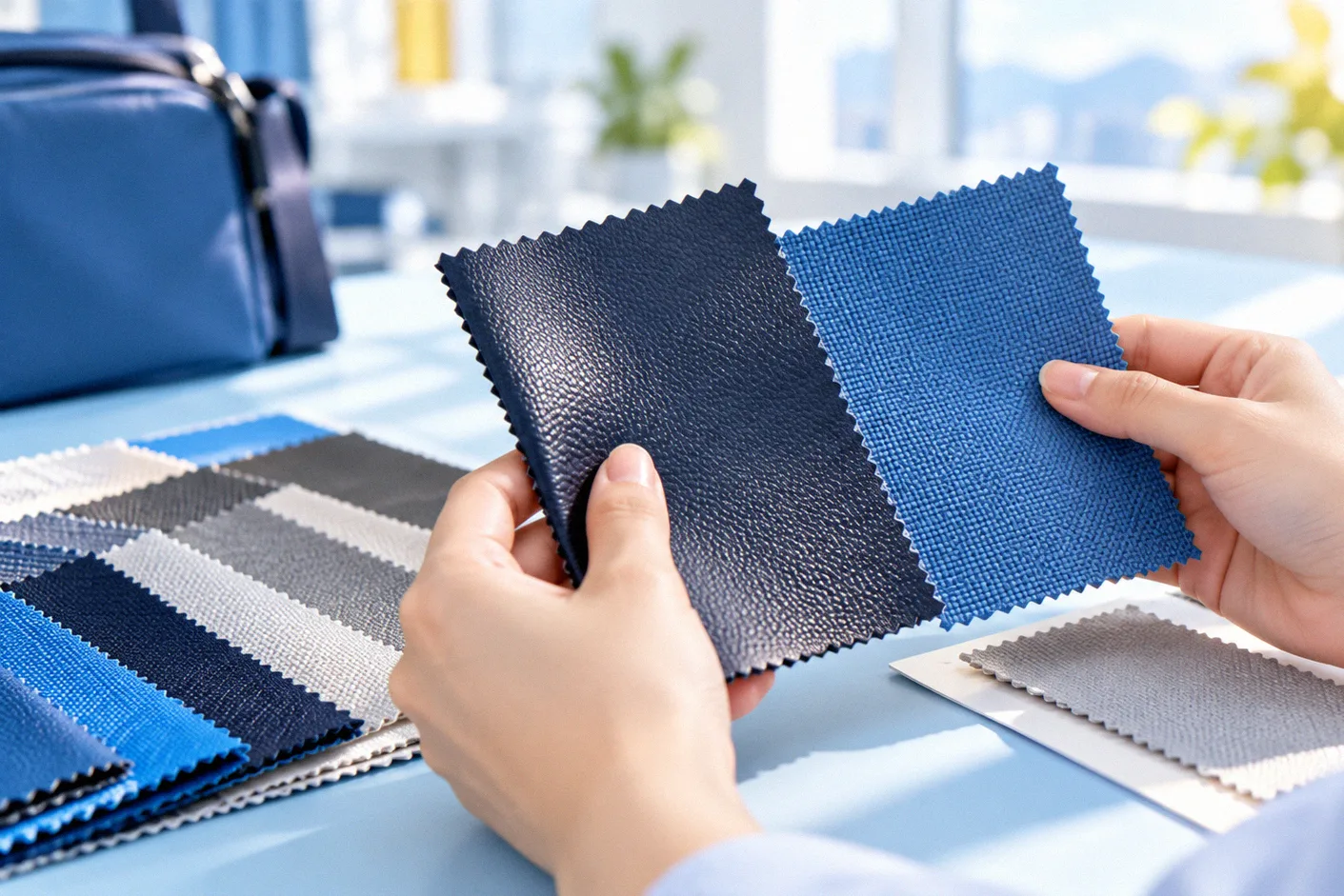
Two quotations for "a 600D polyester backpack" can differ by 40% and both can be honest. Fabric denier, coating, lining weight, zipper brand, foam density, webbing width and the number of stitching operations all move the price. Ask every supplier to quote against the same written specification, and ask each to list the assumptions they made. If one price is dramatically lower, the usual explanation is a thinner material or cheaper hardware rather than a better factory.
Remember that quantity changes unit price significantly. A 500-piece test order and a 5,000-piece reorder are different cost structures, because cutting setup, pattern preparation and line balancing are spread across fewer units in a short run.
5. Treat the sample as the contract
The approved pre-production sample, not the email thread, is what the production line copies. Budget 7–12 days for sampling and expect at least one revision round on a new development. Review the sample against your specification point by point: dimensions, stitch density, zipper operation, hardware finish, colour against your reference swatch, logo placement and lining quality. Sign off in writing, and keep a counter-sample yourself so both sides are measuring against the same physical object.
6. Agree quality standards before production, not after
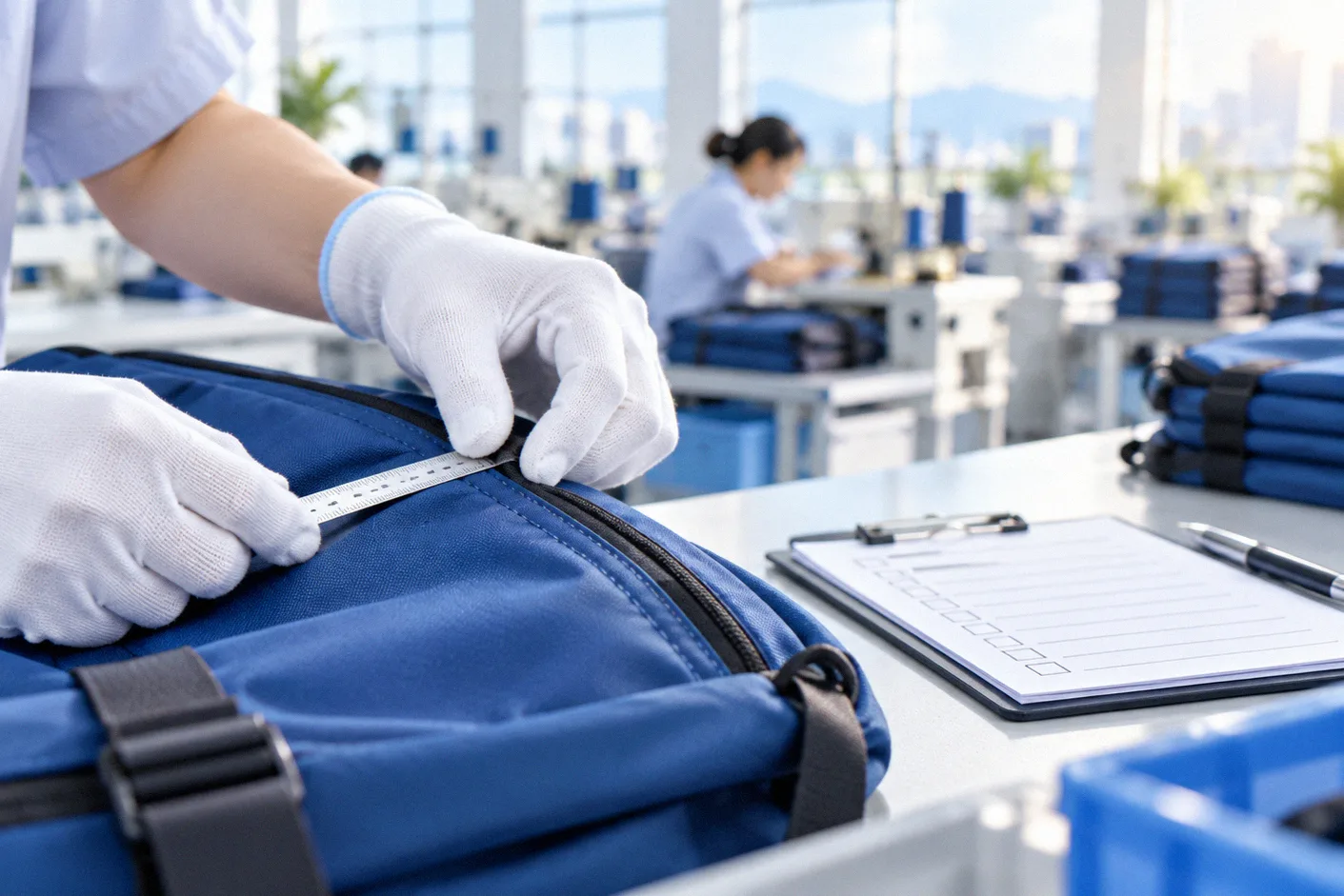
Define what counts as a defect and what inspection standard applies. AQL 2.5 sampling on finished goods is the common benchmark in bag and garment production, and it gives both sides an objective pass/fail rule rather than an argument about opinion. Specify the checkpoints you care about — seam strength, zipper cycling, symmetry, dimensional tolerance, print or logo accuracy — and ask how the factory inspects during production rather than only at the end.
7. Plan the calendar backwards from your launch date
Bulk production typically takes 25–40 days depending on category, material availability and order size. Add sampling ahead of it, and add ocean freight behind it, which commonly runs several weeks depending on destination. Chinese New Year compresses the calendar every year: factories slow down for several weeks, and buyers who place orders in the weeks before it often wait far longer than the quoted lead time. If your launch is fixed, work backwards and place the order earlier than feels necessary.
8. Decide your Incoterms and inspection before shipment
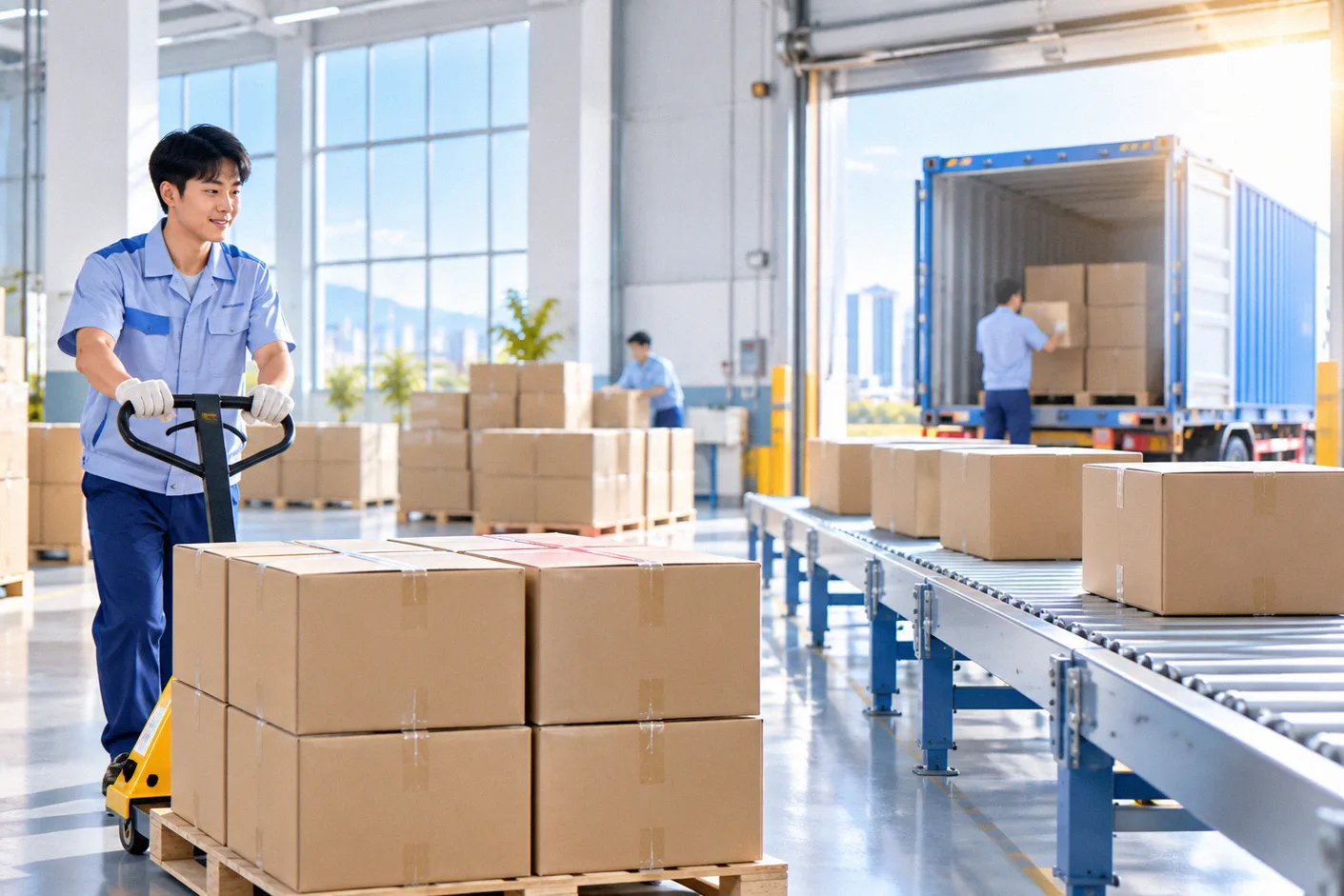
FOB is the most common term for bag orders and keeps the factory responsible until the goods are loaded at port. DDP shifts more of the logistics and import burden to the supplier, which is simpler but bundles costs you can no longer see separately. Decide whether you want a third-party pre-shipment inspection, and if so, book it while the order is still on the line rather than the day the container closes.
What this looks like in practice
A first-time buyer sourcing a 500-piece test order of a custom commuter bag should expect roughly: one week to finalise the specification and shortlist, one week for quotations, 7–12 days for sampling plus a revision round, 25–40 days for production, then inspection and shipping. That is a realistic three- to four-month runway from first email to warehouse — and it shortens considerably on the second order, because the pattern, materials and quality baseline already exist.