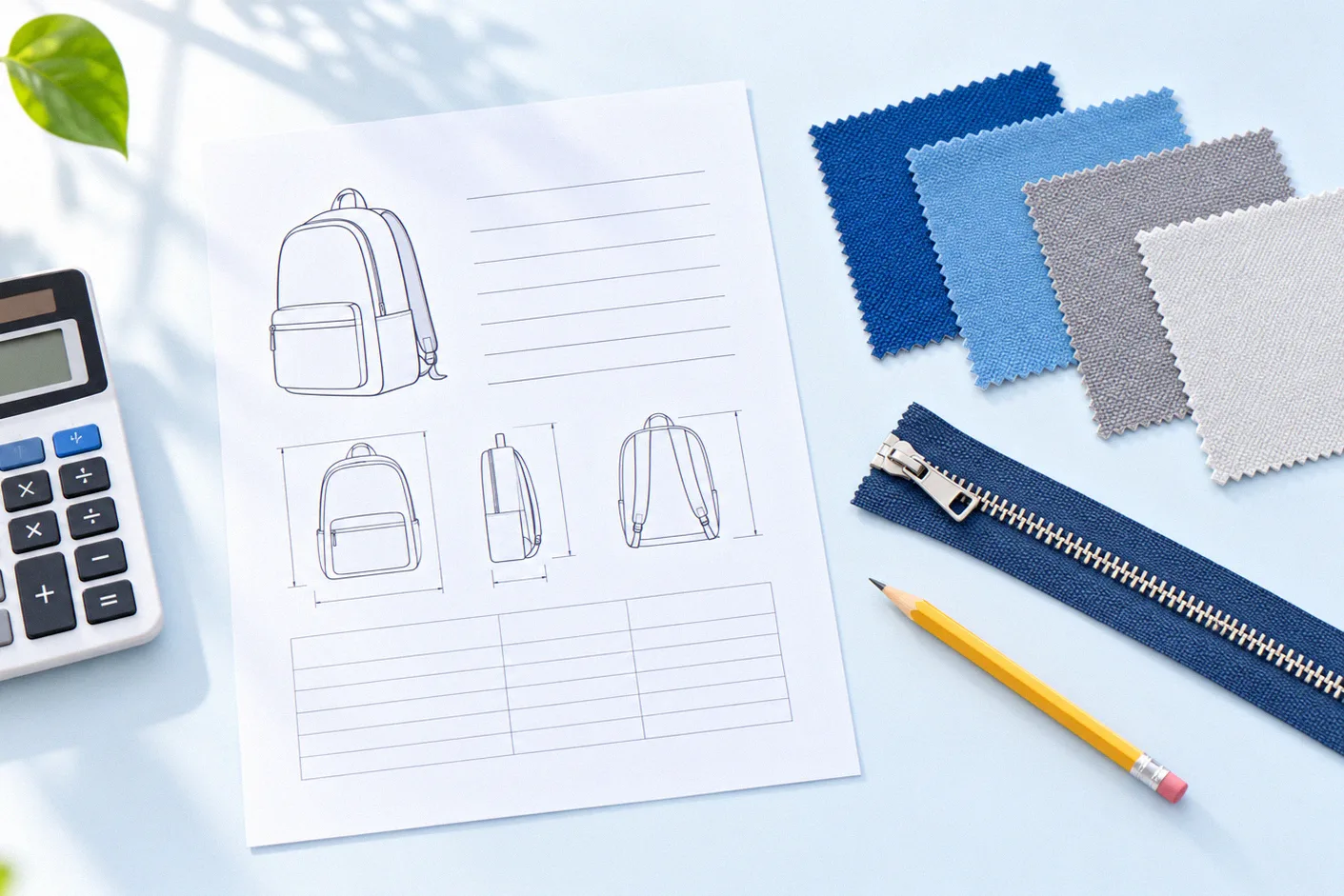
Free buyer tool
Bag Manufacturing Cost Calculator — Estimate Your Cost Per Unit
Estimate an indicative FOB cost per unit, total order value, MOQ feasibility and timeline for a custom bag programme. Built by a factory of roughly 500 employees, not a broker.
- MOQ from 500 pcs
- Sampling 7–12 days
- ~500,000 pcs / month
Indicative estimate
Your estimated range
- FOB cost per unit
- —
- Total order value
- —
- MOQ feasibility
- —
- Estimated timeline
- —
Indicative only. These bands reflect typical cost structures for each category, material and quantity tier at FOB terms. They are not a quotation. A binding price needs a confirmed specification, material selection and hardware list.
Send this estimate for an exact quoteCost structure
How bag manufacturing cost actually breaks down
A custom bag's unit cost is built from six components, and materials plus labour account for the majority of it. Understanding the split is what lets you negotiate on specification rather than simply pushing on price.
| Cost component | Share of unit cost | What drives it up |
|---|---|---|
| Materials (outer, lining, foam) | 35–55% | Material family and grade, denier or leather selection, colour count, cutting yield. |
| Labour & construction | 20–35% | Panel count, compartments, stitching complexity, line-balancing losses on short runs. |
| Hardware & trims | 8–18% | Zipper type and brand, buckles, webbing, plating finish, custom-tooled components. |
| Development & sampling | 2–6% | Pattern making and prototype rounds, amortised across the order quantity. |
| Packaging | 2–6% | Polybag, hangtag, retail box, carton spec and marking requirements. |
| Quality control & overhead | 5–12% | Inspection stages, rework allowance, factory overhead and administration. |
Category also shifts the balance. Material-heavy travel bags sit at the top of the material share, while structured women's handbags shift weight toward labour. Detailed specification guidance lives on the materials page.
Quantity economics
Why low quantities carry a higher unit cost
Short runs are more expensive per piece because fixed costs do not shrink with the order. Pattern making, line setup, material minimums and the first hours of a run happen once whether you order 500 pieces or 5,000.
Line balancing is the less obvious factor. A sewing line reaches its efficient rhythm after a warm-up period; a short run spends a larger share of its time in that ramp. That is real cost, and any factory quoting a low MOQ is absorbing part of it.
Eighteen Craft accepts the trade-off deliberately: a flexible MOQ from approximately 500 pieces lets a brand validate a design before committing capital, and capacity of about 500,000 pieces per month means the scale-up runs on the same line. Paying a premium on 500 test pieces beats writing off 5,000 unsold ones.
Six ways to reduce cost without losing quality
Change the material family
Moving from genuine leather to a high-grade PU, or from 900D to 600D polyester, is the single largest lever available. It routinely moves unit cost more than every other change combined.
Simplify the construction
Each extra compartment, pocket and panel adds sewing operations. Removing two low-use pockets can cut labour meaningfully without a visible loss of function.
Standardise the hardware
Stock zippers, buckles and webbing in standard finishes cost far less than custom-tooled or specially plated components — and carry no tooling minimum.
Consolidate colourways
Three colourways of one style cost more per unit than one colourway at the same total quantity, because each colour is effectively its own run.
Raise the quantity tier
Setup and development are spread over more pieces. Going from 500 to 2,000 pieces typically lowers unit cost by a double-digit percentage on the same specification.
Fix the specification early
Changes after the pre-production sample cost time and money. A settled tech pack is cheaper than a flexible one.
From estimate to real quote
What a factory needs before it can price your bag accurately
A calculator gives a range. A quotation needs specifics. Send as many of the following as you have and the quoted price will be both faster and closer to the final number.
Reference or design
A tech pack, drawings, photos of a similar product, or a physical sample to work from.
Dimensions & capacity
Finished size, or the device and contents the bag must fit.
Material direction
Preferred family and grade — or a target price and we will propose the material plan.
Hardware expectations
Zipper type, buckle style, plating finish and whether branded components are required.
Branding requirements
Logo method, placement, hangtags, woven labels and packaging specification.
Quantity & timing
Pieces per style and colourway, plus the date the goods must be in market.
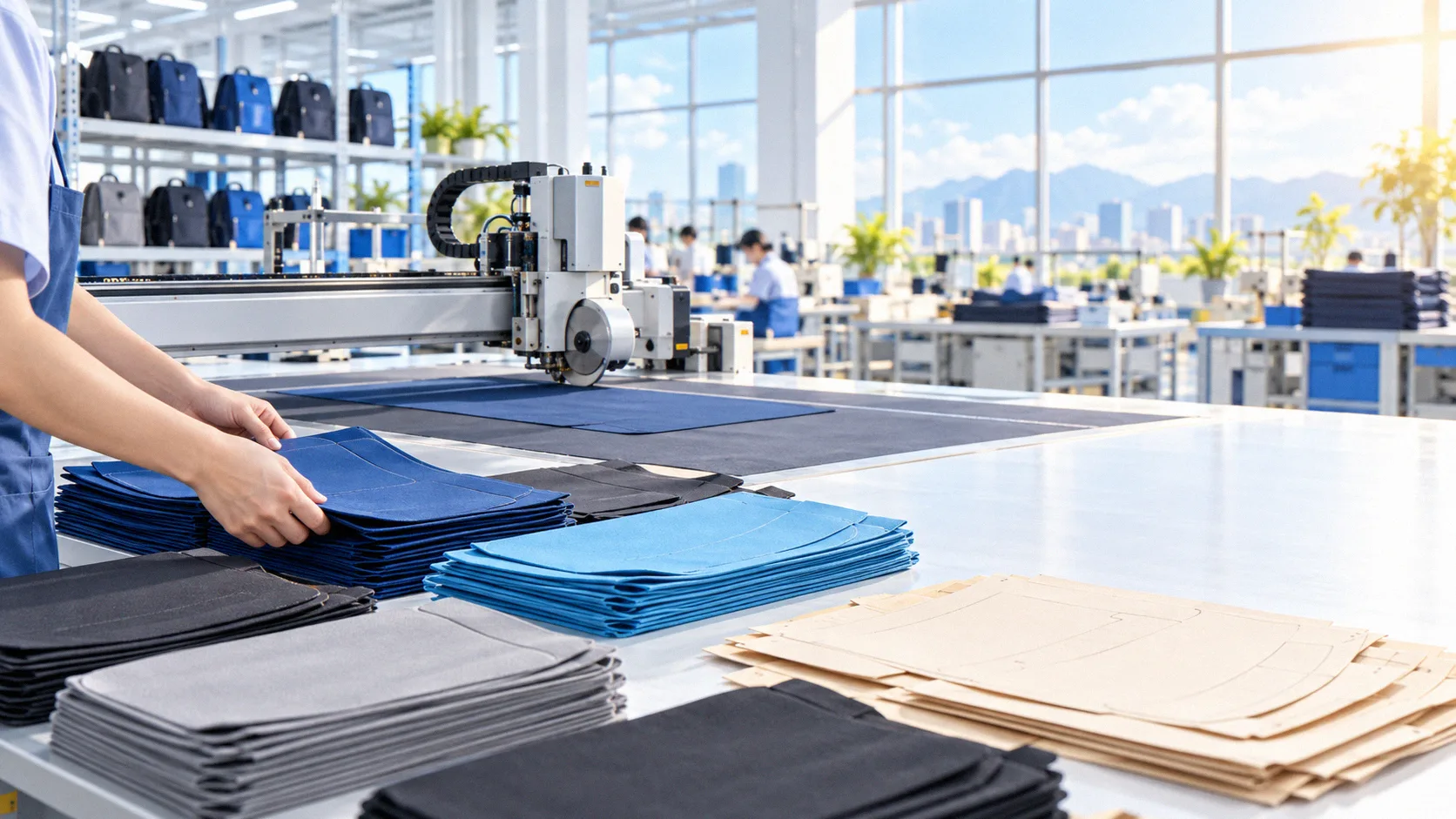
The full development sequence is documented on the OEM & ODM process page, and the capacity behind these timelines is shown inside our factory.
Cost questions
Frequently asked questions
Browse the eight bag categories for category-specific cost drivers.
How much does it cost to manufacture bags?
There is no single figure — a custom bag's FOB cost is driven by materials, construction labour, hardware, order quantity and packaging. As a broad reference, simpler fabric bags and pouches often fall in the low single-digit USD range per unit, everyday backpacks and commuter bags in the mid single digits to low teens, and structured leather handbags well above that. Use the calculator on this page for a band matched to your actual specification, then request a formal quote.
How much does it cost to make a bag at low quantity?
Short runs carry a higher unit cost because setup, pattern work and line balancing are spread over fewer pieces. At an Eighteen Craft MOQ of approximately 500 pieces, expect a unit price meaningfully above the same specification at 2,000 or 5,000 pieces. That premium is usually far cheaper than over-ordering a design that has not been market-tested.
What is the minimum order quantity for custom bags?
Eighteen Craft takes orders from approximately 500 pieces per style. The minimum rises when a programme needs custom-dyed materials, custom-tooled hardware or an unusually complex construction, and it applies per style rather than per order.
How is bag manufacturing cost split between materials and labour?
Materials typically account for 35–55% of unit cost, construction labour for 20–35%, hardware and trims for 8–18%, with development, packaging, quality control and overhead making up the remainder. Material-heavy categories such as travel bags sit at the upper end of the material share; labour-intensive structured handbags shift the balance toward labour.
How long does bag sampling and production take?
Sampling typically takes 7–12 days once specification and materials are confirmed. Bulk production typically runs 25–40 days after written pre-production sample approval, varying with quantity, category and customisation depth.
Is this calculator a binding quotation?
No. It returns an indicative band based on typical cost structures for each category and quantity tier, intended to help you budget and self-qualify before contacting a factory. A binding quotation requires a confirmed specification, material selection and hardware list — send those through the form on this page and we will price them properly.
Get your exact quote
Turn the estimate into a real price
Your calculator selection is carried into the message field automatically. Add a reference image or tech pack detail and we will quote it properly — within 24 hours on business days.
- Phone
- +86 15398220952

Request an exact quotation
We reply within 24 hours on business days with a price, MOQ and lead time against your specification.