Material choice determines most of a bag's unit cost, its perceived value on a shelf, and how it performs after a year of use. The six families used across bag manufacturing — PU, synthetic leather, genuine leather, polyester, nylon, and canvas — each solve a different problem. Choosing well is less about finding the "best" material and more about matching the material to the category, the price point and the customer.
PU and synthetic leather: leather appearance at controlled cost
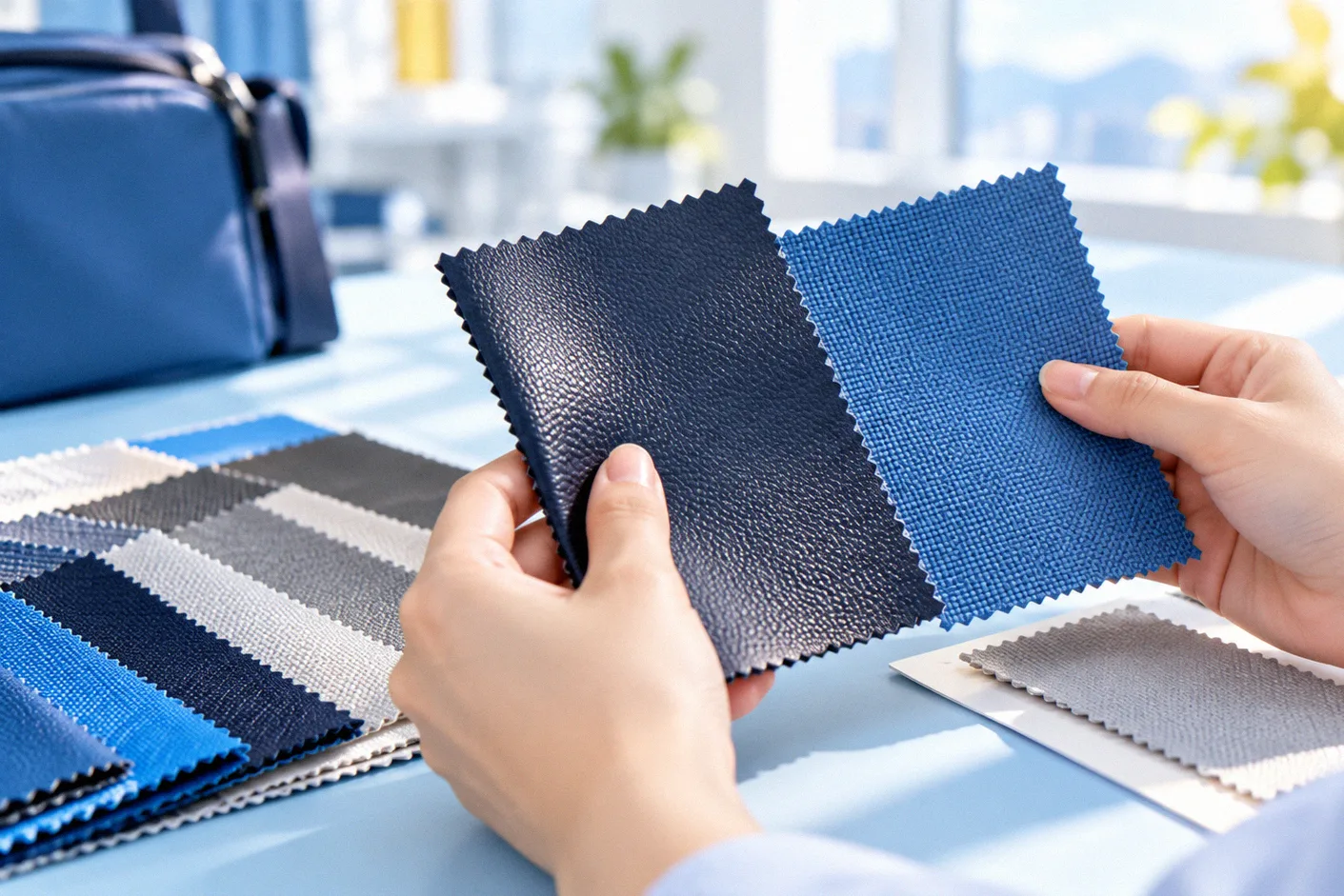
PU (polyurethane) and synthetic leathers give you a leather look with lower cost, lower weight and far more batch-to-batch colour consistency than hide. They are produced as a coating over a fabric backing, which means thickness, surface texture and finish are all specifiable — litchi grain, saffiano, pebbled, matte or patent are routine options.
For brands, the practical advantages are predictability and cutting yield. A roll of PU cuts with far less waste than a natural hide, which matters at small order quantities where material waste has a visible effect on unit cost. PU also supports vegan product positioning without a price premium. The trade-off is lifespan: surface coatings eventually crack or peel with heavy use, and quality varies widely between grades, so specify the grade rather than just saying "PU".
Best suited to: women's handbags, cosmetic bags, structured laptop bags and urban commuter styles.
Genuine leather: premium positioning with real trade-offs
Genuine leather earns its price through hand-feel, patina and perceived value, and it remains the right choice for premium lines where the material itself is part of the story. Full-grain retains the natural surface and ages best; top-grain is sanded and more uniform; split leather is the lower layer and behaves quite differently from either.
Be honest with yourself about the trade-offs before committing. Leather is heavier, more expensive, slower to source in consistent colour, and shows natural grain variation that retail customers occasionally read as a defect. Minimum order quantities also tend to rise because hides are bought in batches. For a first market test, many brands prototype in leather and launch in PU.
Best suited to: premium handbags and executive briefcases.
Polyester and nylon: the workhorses of soft bags
Polyester and nylon Oxford fabrics carry most backpacks, travel bags, tool bags and commuter styles. They are specified by denier — a measure of yarn thickness — which is why you see 210D, 420D, 600D, 900D and 1680D on spec sheets. Higher denier means a heavier, more abrasion-resistant fabric. 600D is the common mid-point for everyday backpacks; 900D and above suits heavy-duty and tool applications; 210D–420D is typical for linings and lightweight packable bags.
Between the two fibres: nylon is lighter, softer in hand and more abrasion-resistant for a given weight, which is why technical and outdoor-leaning products lean nylon. Polyester holds colour better under UV exposure, resists water slightly better in its raw state and costs less, which is why most volume commuter and promotional products lean polyester. Both are usually coated — PU, PVC or TPU — to add water resistance, and the coating should be specified separately from the fabric.
Best suited to: backpacks, travel bags, laptop bags, tool bags and organizer sets.
Canvas: natural surface, strong print behaviour
Canvas is a heavy plain-weave cotton or cotton blend with a natural, matte surface that takes screen printing exceptionally well. It is specified by weight — commonly 8oz to 16oz for bags — where heavier canvas gives more structure and a more substantial hand. Waxed finishes add water resistance and a distinctive appearance that ages visibly.
Canvas is the default for branded totes and lifestyle products because print cost is low and the material reads as honest and unfussy. Its limits are weight and water behaviour: untreated cotton absorbs water and dries slowly, and heavy canvas bags are noticeably heavier empty than a nylon equivalent.
Best suited to: totes, casual shoulder bags, tool bags and promotional lines.
How to choose: three questions
What is the use scenario? Daily commuting with a laptop favours coated polyester or nylon. Occasional evening use favours PU or leather. Trade and jobsite use favours high-denier polyester or heavy canvas.
What is the target retail price? Material typically accounts for a large share of unit cost, so it is the fastest lever for hitting a price point. Moving from genuine leather to a good-grade PU, or from 900D to 600D polyester, changes cost more than any other single decision.
How many units are you making? At 500-piece test quantities, materials with high cutting yield and readily available stock colours keep cost and lead time under control. Custom-dyed or specially finished materials generally make more sense once volumes rise.
Do not forget the components
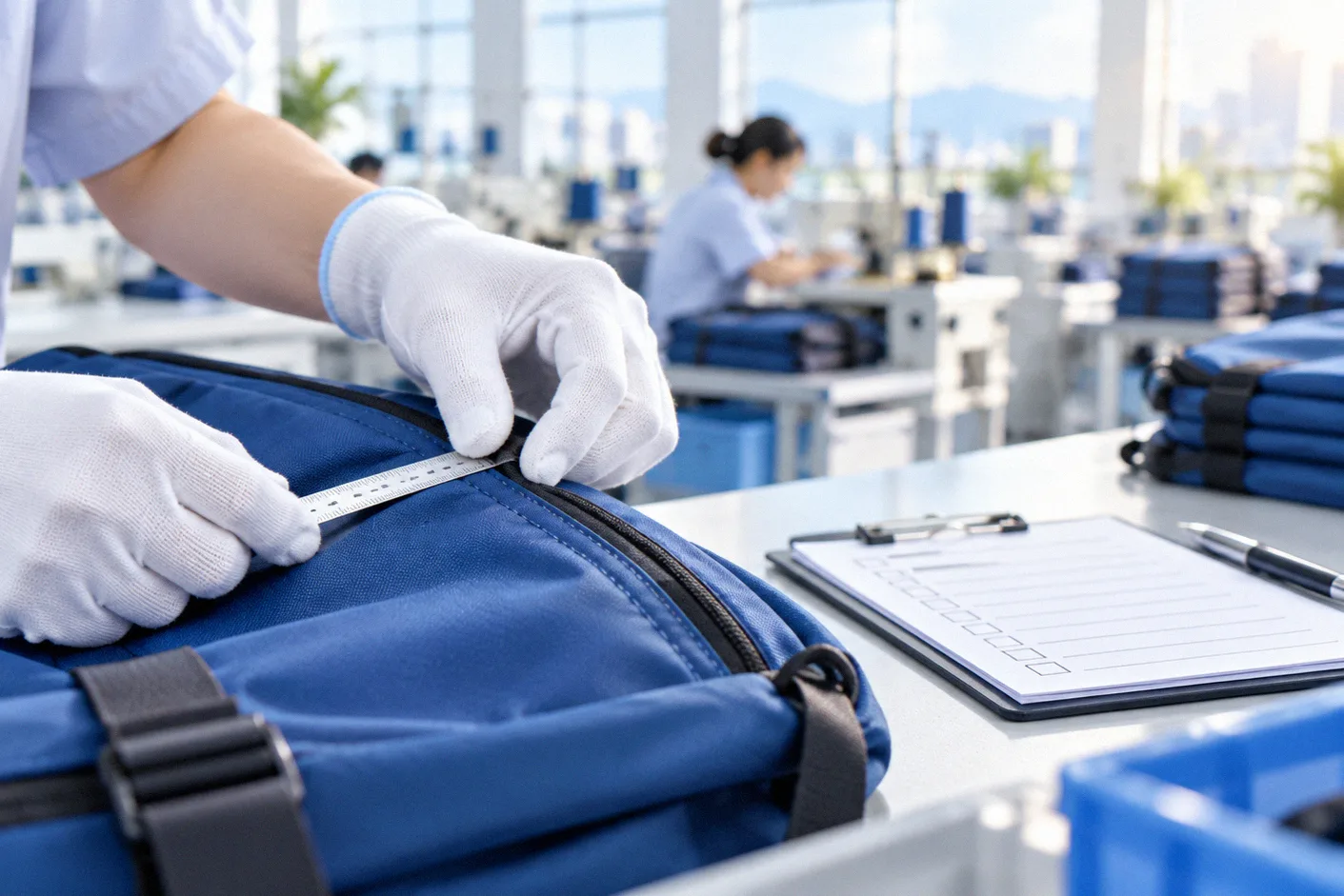
Outer fabric gets the attention, but zippers, buckles, webbing, lining, foam padding and reinforcement affect both durability and perceived quality. A well-chosen outer fabric paired with a weak zipper produces returns. Specify the component level alongside the material, and ask your manufacturer what it recommends for the use case — a factory that makes the category daily will have a view worth hearing.